← Back to all courses Ku noqo dhammaan koorsooyinka
U.S. History
From first peoples to modern America, built on Heimler's History and Crash Course.
Somali support text on this page is a draft, needs native review. Qoraalka Soomaaliga waa qabyo oo wuxuu sugayaa dib-u-eegis.
About this course
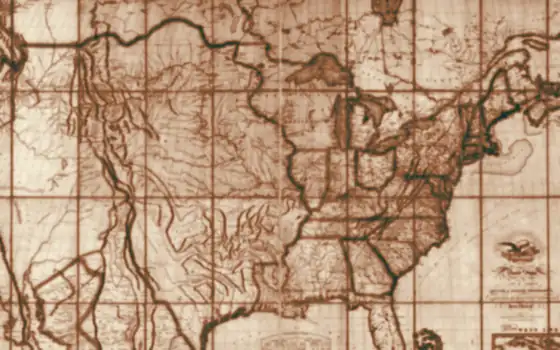
U.S. History tells the story of the land and people that became the United States, from Native nations before 1492 to the challenges of the 21st century. In this one-credit, grade 11 course you will study colonization and slavery, the Revolution and Constitution, expansion, the Civil War, industrialization and immigration, two world wars, the civil rights movement and modern America. Minnesota is part of the story: the Dakota and Ojibwe homelands, the U.S.-Dakota War of 1862, immigrant farmers and miners, and today's Somali, Hmong, Oromo and Latino communities. You will also see how immigrants, including East Africans, have shaped and been shaped by American laws and ideas. History is not only memorizing dates. It is asking why things happened, whose voices were heard, and how the past explains the present. Each unit has video lessons, guided notes, primary sources, a discussion and a project.
Before you start
None. World History is helpful but not required.
What you will learn
- Students will explain major causes and effects of key events in U.S. history from before 1492 to the present.
- Students will analyze primary and secondary sources for point of view, purpose and reliability.
- Students will describe how the Constitution was created and how its meaning has changed over time.
- Students will trace the struggle for civil rights and equality for Native, Black, immigrant and women Americans.
- Students will connect national events to Minnesota history and to their own communities.
- Students will explain how economic changes such as industrialization and the Great Depression affected people's lives.
- Students will write evidence-based historical arguments and present them clearly.
Units and lessons
Unit 1: First peoples and colonization
- Native American Societies Before 1492
- Which Indigenous Nations First Called Minnesota Home?
- The Black Legend, Native Americans, and Spaniards
- Colonizing America: Jamestown to Massachusetts Bay
- The Natives and the English
- Interactions Between American Indians and Europeans
- The Regions of the British Colonies
- Slavery in the British Colonies
- The Transatlantic Slave Trade
- Slavery in the American Colonies
Unit 2: Revolution and Constitution
- Taxes, Protest and the Road to Revolution
- Enlightenment Ideas Behind the Revolution
- Democratic Ideals in the Declaration
- How the Americans Won the War
- Who Won the American Revolution?
- Black Americans in the Revolution
- The Articles of Confederation
- Reading the Articles and Shays's Rebellion
- Federalism and Separation of Powers
- Constitutional Compromises
- Checks and Balances
- The Bill of Rights
Unit 3: Early republic and expansion
- Thomas Jefferson and His Democracy
- The Market Revolution
- Market Revolution: Transportation, Industry and Farming
- Jackson and Federal Power
- History vs. Andrew Jackson
- The Trail of Tears and the Indian Removal Act
- An Age of Reform
- Women in the 19th Century
- Manifest Destiny
- The Mexican-American War
- Why Treaties Matter
- Dakota Treaties in Minnesota
Unit 4: Civil War and Reconstruction
- The Failure of Compromise
- The Election of 1860 and the Road to Disunion
- The Election of 1860 and Secession
- The Civil War, Part 1
- The Civil War, Part 2
- Government Policies During the Civil War
- U.S.-Dakota War: Introduction
- U.S.-Dakota War: The War
- U.S.-Dakota War: Internment
- Reconstruction After the Civil War, Explained
- Reconstruction and 1876
- The Failure of Reconstruction
Unit 5: Industry, immigration and the Gilded Age
- The Industrial Economy
- The Rise of Industrial Capitalism
- Monopolies and Trusts
- Mill City: Minneapolis Flour Milling
- Labor in the Gilded Age
- Union Busting
- Immigration and Migration in the Gilded Age
- Responses to Immigration in the Gilded Age
- Growth, Cities, and Immigration
- Westward Expansion
- Gilded Age Politics
Unit 6: Progressive Era, empire and World War I
- The Progressive Era
- Goals and Effects of Progressive Reform
- Progressive Presidents
- Debates About American Imperialism
- The Spanish-American War
- American Imperialism
- Why the U.S. Entered World War I
- America in World War I
- World War I on the Home Front
- Women's Suffrage
Unit 7: The 1920s, Depression and New Deal
- The Roaring 20s
- 1920s Culture and Political Controversies
- 1920s Urbanization and Immigration
- The 1929 Stock Market Crash
- The Great Depression
- What Causes an Economic Recession?
- The Great Depression and the New Deal
- The New Deal
- The Dust Bowl
- How Social Security Works
- The Great Depression and Black Americans
Unit 8: World War II
- World War II Part 1: The Road to War and the Fighting
- Mobilizing for World War II
- How the Allies Won World War II
- World War II Part 2: The Home Front
- The Myth of Rosie the Riveter
- Black Americans in World War II
- The Double V Campaign
- Japanese American Incarceration: Aki Kurose's Story
- Executive Order 9066 and Eleanor Roosevelt
- Korematsu v. United States
- Japanese American Responses to Incarceration
Unit 9: Cold War and civil rights
- The Cold War Begins
- Causes and Tools of the Cold War
- Korea and Vietnam
- The Cold War in the Horn of Africa
- Why Vietnam Divided America
- A Hmong Family's Journey
- Civil Rights in the 1940s and 1950s
- Civil Rights and the 1950s
- Brown v. Board of Education Explained
- Letter from Birmingham Jail
- Civil Rights in the 1960s
- The Civil Rights Movement Expands
Unit 10: Modern America
- The Reagan Revolution
- Ronald Reagan and Conservatism
- George H.W. Bush and the End of the Cold War
- The Clinton Years and the 1990s
- Globalization, Trade and Poverty
- Migrants and Refugees: What's the Difference?
- The Somali Community in Minnesota
- A Somali Refugee Builds Community in Minnesota
- Terrorism, War and George W. Bush
- Challenges of the 21st Century
- How the 2008 Financial Crisis Happened
Minnesota standards
This course aligns to the Minnesota K-12 Academic Standards in Social Studies, especially the History strand (U.S. history eras), with connections to Citizenship and Government, Economics and Geography. It also includes Minnesota and Dakota and Anishinaabe perspectives as encouraged by the standards.
Unit 1: First peoples and colonization
- 9.4.18.8 U.S. History Era 1: Indigenous Histories: Examine multiple Indigenous narratives about early North American history.
- 9.4.19.7 U.S. History Era 1: Indigenous Histories: Identify multiple Indigenous concepts of boundary-making and relationship-building with the environment through economic, political and kinship systems.
- 9.4.18.9 U.S. History Era 2: Settler Colonialism and Atlantic Slavery: Evaluate European, Indigenous and African diasporic historical narratives about colonialism and slavery.
- 9.4.19.8 U.S. History Era 2: Settler Colonialism and Atlantic Slavery: Identify how Indigenous people built new coalitions and developed a diverse set of strategies in response to European settler colonialism. Examine how Indigenous perspectives and strategies may have changed over time.
- 9.4.20.7 U.S. History Era 1: Indigenous Histories: Interpret a variety of historical sources (including objects, artistic works, written accounts and oral narratives) in order to develop a nuanced understanding of the multiple, diverse and complex societies in North America before European colonialism.
- 9.4.20.8 U.S. History Era 2: Settler Colonialism and Atlantic Slavery: Investigate historical sources about colonialism, religion and slavery, asking who created them and whose interests were articulated or excluded. Analyze the ways in which the perspectives of those recording history shaped the history that they produced.
Unit 2: Revolution and Constitution
- 9.4.18.10 U.S. History Era 3: Freedom, Unfreedom and Revolution: Identify and analyze dominant and non-dominant narratives about the American Revolution.
- 9.4.20.9 U.S. History Era 3: Freedom, Unfreedom and Revolution: Examine the founding documents and early statutes of the United States, focusing on the Declaration of Independence, the Constitution and the Great Law of Peace (Haudenosaunee Constitution) as historical sources, asking who created them, whose voices were absent and whose interests were articulated or excluded.
- 9.4.19.9 U.S. History Era 3: Freedom, Unfreedom and Revolution: Examine Black, Indigenous, working class and/or women's perspectives on a major issue that occurred during the American Revolution and the early Republic.
- 9.1.2.1 Analyze the foundational ideas of the United States government embedded in founding era documents: natural rights philosophy, social contract, civic virtue, popular sovereignty, constitutionalism, representative democracy, political factions, federalism and individual rights.
- 9.4.21.10 U.S. History Era 3: Freedom, Unfreedom and Revolution: Develop an argument based on multiple historical sources about the relationship between revolutions and/or rebellions in the Americas, including, but not limited to, the American Revolution and the Haitian Revolution. Distinguish between long-term causes and triggering events in developing a historical argument.
Unit 3: Early republic and expansion
- 9.4.18.11 U.S. History Era 4: Imperial Expansion and Native Dispossession: Evaluate historical narratives about U.S. imperial expansion, native dispossession (specifically Indian Removal), Manifest Destiny and Indigenous perspectives.
- 9.4.19.10 U.S. History Era 4: Imperial Expansion and Native Dispossession: Identify and analyze Mexican, Asian, African American and/or Indigenous perspectives on the Mexican War, the Louisiana Purchase, Texas, the Gold Rush, the trans-continental railroad and/or other U.S. territorial acquisition strategies.
- 9.4.20.10 U.S. History Era 4: Imperial Expansion and Native Dispossession: Interpret multiple primary or secondary sources to understand and analyze the perspectives of individuals and communities who were affected by and/or participated in imperial expansion and Native Dispossession, including Indigenous, Mexican, Black and/or Asian perspectives.
- 9.4.21.11 U.S. History Era 4: Imperial Expansion and Native Dispossession: Critique the central argument in secondary historical sources about the Industrial Revolution and its relationship to new technologies, accelerated expansion, capitalist growth, slavery and/or colonialism.
- 9.4.19.9 U.S. History Era 3: Freedom, Unfreedom and Revolution: Examine Black, Indigenous, working class and/or women's perspectives on a major issue that occurred during the American Revolution and the early Republic.
Unit 4: Civil War and Reconstruction
- 9.4.21.12 U.S. History Era 5: Slavery, Civil War and Reconstruction: Analyze multiple and complex causes and effects of the U.S. Civil War and its impact on African Americans and Indigenous people.
- 9.4.18.12 U.S. History Era 5: Slavery, Civil War and Reconstruction: Examine how debates over slavery, freedom and rights during and after the Civil War influenced the status and rights of European immigrants, Mexicans and Mexican Americans, women, Asian Americans and/or Indigenous people in comparison to African Americans.
- 9.4.20.11 U.S. History Era 5: Slavery, Civil War and Reconstruction: Interpret multiple primary sources related to the Civil War and abolition in order to analyze how Black and white abolitionists successfully pressured the U.S. government to end slavery.
- 9.4.19.11 U.S. History Era 5: Slavery, Civil War and Reconstruction: Identify and analyze how enslaved and freed people of color resisted slavery, built coalitions and navigated discrimination and racism in the United States.
- 9.4.22.11 U.S. History Era 5: Slavery, Civil War and Reconstruction: Examine how people today view the successes and failures of Reconstruction and the implementation of the 13th, 14th, and 15th Amendments on the overall impact to reduce discrimination and inequality.
Unit 5: Industry, immigration and the Gilded Age
- 9.4.19.12 U.S. History Era 6: Migration, Imperialism and Inequality: Identify patterns, intersections and causes of stratification (including racial, class, gender, citizenship status and/or religion) that lead to social inequalities. Identify their impact on both individuals and groups in the United States and across the world.
- 9.4.18.13 U.S. History Era 6: Migration, Imperialism and Inequality: Evaluate historical and contemporary arguments about the relationship between U.S. expansion and migration and the role of the United States as an overseas empire.
- 9.4.21.13 U.S. History Era 6: Migration, Imperialism and Inequality: Describe and analyze the effectiveness of political and cultural responses to the problems of industrialism, monopoly capitalism, urbanization and political corruption.
- 9.2.8.5 Identify measures of income distribution, wealth distribution, causes of income inequality, and poverty. Explain how these affect, and are affected by, the economy. Evaluate the effectiveness of, and incentives created by, government income redistribution programs.
Unit 6: Progressive Era, empire and World War I
- 9.4.21.13 U.S. History Era 6: Migration, Imperialism and Inequality: Describe and analyze the effectiveness of political and cultural responses to the problems of industrialism, monopoly capitalism, urbanization and political corruption.
- 9.4.18.13 U.S. History Era 6: Migration, Imperialism and Inequality: Evaluate historical and contemporary arguments about the relationship between U.S. expansion and migration and the role of the United States as an overseas empire.
- 9.4.20.12 U.S. History Era 6: Migration, Imperialism and Inequality: Interpret historical sources created by North American Indigenous peoples and other colonized peoples (i.e., Cubans, Filipinos, Puerto Ricans, Hawaiians, etc.) in order to examine how they responded to changes in federal Indian policy and/or foreign policy, especially regarding migration, forced removal, sovereignty, land ownership, education, religion and assimilation. Analyze how current interpretations of the past are limited by the extent to which available historical sources represent perspectives of people at the time.
- 9.1.3.7 Explain how citizenship processes, requirements and duties are established by law. Evaluate the struggle for citizenship since the founding period.
Unit 7: The 1920s, Depression and New Deal
- 9.4.22.12 U.S. History Era 6: Migration, Imperialism and Inequality: Examine the causes and impact of the Great Depression on individuals, communities and institutions. Evaluate the impact of the New Deal and assess how people today view government responses to economic crises, including who is helped or hurt by action or inaction.
- 9.2.11.1 Measure full employment in terms of the unemployment rate and various types of unemployment. Analyze past and recent data to describe factors that impact the long-run growth of jobs in an economy.
- 9.2.11.5 Analyze and evaluate how various government fiscal policies are likely to impact overall output, employment, the price level and the national deficit/debt.
- 9.4.19.12 U.S. History Era 6: Migration, Imperialism and Inequality: Identify patterns, intersections and causes of stratification (including racial, class, gender, citizenship status and/or religion) that lead to social inequalities. Identify their impact on both individuals and groups in the United States and across the world.
Unit 8: World War II
- 9.4.18.14 U.S. History Era 7: U.S. and the World: Analyze the connections between nationalism, Fascism, World War II and the Holocaust on a global scale and in the United States.
- 9.4.20.13 U.S. History Era 7: U.S. and the World: Interpret multiple primary sources to explore the experiences of refugees and immigrants to the United States during the mid-20th century. Use secondary sources to contextualize their experiences.
- 9.1.3.5 Evaluate the current and historical interpretations of the principles of due process and equal protection of the law in the 14th Amendment. Analyze evolving civil rights in legislative action and court interpretation.
- 9.4.19.12 U.S. History Era 6: Migration, Imperialism and Inequality: Identify patterns, intersections and causes of stratification (including racial, class, gender, citizenship status and/or religion) that lead to social inequalities. Identify their impact on both individuals and groups in the United States and across the world.
Unit 9: Cold War and civil rights
- 9.4.19.13 U.S. History Era 7: U.S. and the World: Analyze how historical developments shaped and continue to shape people's perspectives about the Cold War, capitalism, socialism and communism on a global scale and in the United States.
- 9.4.18.15 U.S. History Era 8: Civil Rights Struggles: Analyze complex and interacting factors within the Long Civil Rights Movement. Identify obstacles to the success of the various civil rights movements, such as Black, Indigenous, women, Latinx American, Asian American and/or Queer rights movements. Identify intersections between the movements. Explain strategies used to overcome the obstacles and the role of key leaders and groups.
- 9.4.19.14 U.S. History Era 8: Civil Rights Struggles: Describe different perspectives regarding the role of the United States in Southeast Asia, including the Vietnam War. Analyze the causes and effects of the United States Secret War in Laos and how Hmong allies were impacted as a result of their involvement in this war.
- 9.4.20.14 U.S. History Era 8: Civil Rights Struggles: Interpret how new media (e.g., television, internet and social media) and new technologies (e.g., computers, drones) have influenced the creation, interpretation and memory of historical events.
- 9.5.25.1 Evaluate the legacy and lasting effects of the civil rights movements of the 1960s and 1970s; explain their connections to current events and concerns.
Unit 10: Modern America
- 9.4.21.15 U.S. History Era 8: Civil Rights Struggles: Explain the difference between an immigrant and a refugee. Describe various immigrant, migrant and refugee groups, focusing on Hmong, Somali, Indian, Ethiopian and Latinx people who have come to the United States. Examine different responses to immigration and the growing diversity of the United States.
- 9.4.19.15 U.S. History Era 9: Contested Freedoms: Examine conflicting perspectives about the impact of federal policies and legislation on American society, specifically taxation, criminal justice, incarceration, free trade and immigration.
- 9.4.18.16 U.S. History Era 9: Contested Freedoms: Identify and evaluate how governmental and non-governmental institutions have responded to foreign and domestic terrorism in the United States. Identify and evaluate how those responses have been influenced by xenophobic and Islamophobic perspectives.
- 9.4.22.14 U.S. History Era 9: Contested Freedoms: Draw on historical examples to propose a viable solution to a pressing economic, environmental or social issue.
- 9.5.23.5 Examine the impact of U.S. imperialism and foreign policy on immigration patterns.
- 9.4.19.13 U.S. History Era 7: U.S. and the World: Analyze how historical developments shaped and continue to shape people's perspectives about the Cold War, capitalism, socialism and communism on a global scale and in the United States.